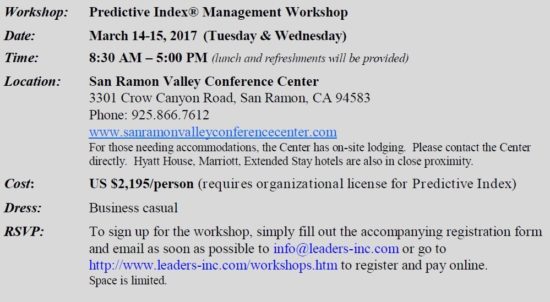
March 2017 Open PI Management Workshop
Phone: 925.831.9100 |
Email: info@leaders-inc.com
Dateline: North Pole, Christmas 2014, By Nancy L. Clark
This week Santa notified the Board of Directors of North Pole Inc. that 2014 would be his last year. He and Mrs. Claus were eager to retire and he was confident that his successor was more than ready.
The Board was supportive and applauded Santa’s dedication for all these years. It was a strenuous job with most people not realizing the time commitment that was required. Santa and Mrs. Claus rarely got more than a few days of vacation. After the Christmas clean-up, he and his elves immediately began new toy design, safety testing, production planning, etc. All agreed, that Santa more than deserved his retirement.
Fortunately, North Pole Inc. was ready for the transition. Several years ago, Mr. Ebenezer, the Chairman of the Board, approached Santa. Santa shared that he had started playing golf and he and Mrs. Claus recently had purchased a home in Belize. Both men agreed that it was time to develop a formal succession plan. Santa promised to help select and develop the next Santa and already had someone in mind.
Given the global exposure and impact, not only did North Pole Inc. need to address the successor selection, development and transition, but it also had to attend carefully to the communication. North Pole Inc. had to be careful not to cause children concern or send parents into a panic or cause elf morale to plummet.
Santa and the Board wanted to ensure that speculation or rumors would not impact toy production. Consequently, regular meetings were held with the elves and reindeer to updated them on what was happening, to answer any questions, and to thank them for their support. Despite the open two-way communication, the current production numbers were slightly below target which Santa and the Board anticipated. Although the transition was going smoothly, the elves naturally were still a bit distracted.
At the Board Meeting this week, Ebenezer announced that Santa had decided to make 2014 his last. Upon the news, the Board exploded into shouts of: “This could be the end of Christmas!” “We have to control the media – we can’t scare all the children!” “The parents are going to have our hides!” “Santa, can’t you stay another year or two?”
With the bang of the gavel, Ebenezer recognized Mr. Marley’s raised hand, one of the more pragmatic Board Members. “Everyone should take a deep breath and calm down. We are faced with what every Board in the world has faced, is facing, and/or will be facing – the retirement of its leader. Given it is Santa, our concern and global exposure is great. We have to be very thoughtful; we cannot make a mistake and we won’t. Everyone here knows that we have been working on Santa’s succession for several years. We are prepared and ready.”
The Board had been thoughtful and very deliberate. They never wavered from their successor criteria:
After much deliberation and input from Santa, they selected Santa’s youngest son, Kris. Mikulas, the eldest son, was more interested in reindeer racing than Christmas; Silver Bell, the daughter, was an engineer and partner in a new toy technology start-up; Nicholas, the middle son, was a lean six sigma consultant; Kris, the youngest, worked at North Pole, Inc. in charge of logistics.
Over the last few years, Kris spent time in all the departments – learning everything about toy design, ribbon and gift wrap, production, chimney navigation, , etc. He was given a leadership coach to help him with the process and to accelerate his learning. He soaked up all of it and seemed to love everything about the work. The elves loved and respected him; the support “Santas” who attended Santa University thought he was great. And, last year, with the guidance of Rudolf, he delivered all the South American presents on Christmas without incident.
Ebenezer resumed control of the meeting. “Santa, is Kris ready?”
All knew that Santa was shy and not comfortable speaking in front of groups, yet he stood, marched confidently to the front of the room and with a resounding voice said, “Kris is more than ready. He will be a great Santa. It is his time.” All members nodded their approval. With that, Santa opened the door and invited Kris to join them. The Board broke into applause. Kris formally accepted the position along with a big bear hug from his father and cheers from his siblings.
The succession plan had given Kris plenty of time to learn all the facets of the job, to learn from his predecessor, to meet and work with all the elves, reindeer, etc. Santa promised to be the backup for 2014, but everyone knew that Kris could handle it. The only thing left to do was to plan a big celebration after Christmas to thank Santa – the predecessor and the successor. Christmas would continue for many, many years thanks to the thoughtful planning of Santa and the Board!
What did Santa and the Board do right?
Leadership Dynamics is a premiere global management consulting firm specializing in:
We work with leadership teams to successfully achieve goals and build positive work environments by developing customized programs. By combining assessment, education, coaching and consulting, we solve challenges and equip you and your team with the needed knowledge to accelerate and sustain your company’s success. Leadership Dynamics is also a member of PI Worldwide with a network of 350+ consultants worldwide, operating in more than 140 countries allowing us to support your global needs locally.
To learn more about how you can harness the power of your talent resources and achieve world class results, please email us at info@leaders-inc.com or call us:
Americas/Asia Pacific Europe/Middle East/Africa
+1 855.831.9100 (Office) +353 87.257.8530 (Office)
+1 925 831.9196 (Fax) +39 075.903.3123 (Fax)
© Copyright 2014, Leadership Dynamics, Inc. All rights reserved.

Selling Power Magazine
Title: Top 20 Sales Training Companies
Date: June 18, 2014
PI Worldwide was included in Selling Power’s 2014 list of Top 20 Sales Training Companies, confirming the effectiveness of our Selling Skills System.
http://www.sellingpower.com/2014/sales-training-companies/top-twenty-listing/
By Del Chandler
As we emerge from this economic “nuclear winter,” we are finding many of our clients are searching for ways to reenergize and refocus their sales teams. This economic “nuclear winter” has taken its toll on many companies and has shaken the confidence of many sales professionals. Cold sales have produced chilled sales associates. 
With the slow, but in process, economic thaw, it is time to reignite your sales team.
As the economy continues to warm up, those companies that prepare their sales teams will be in the best position to take advantage of whatever rebound means today.
Sales managers must get in front of the wave; leaders will not be tolerant or patient with sales executives that don’t help their associates win the business and catch the “spring runoff.”
OK, I can’t keep the weather metaphors going, but you get the picture. It is time to invest in your sales team and get them reengaged and ready. Are they meeting your sales goals? Are they leaving business (MONEY) on the table?
So, what should companies do? Let me first address a couple of things companies should not do:
Don’t:
1. Invest in a lot of advertising without also investing in your sales team. I am always amazed when retailers spend thousands of dollars on advertising to drive consumers into their stores (or call centers); yet, when you visit the store the sales person is clueless on how to close the sale.
2. Create sales reward campaigns that solicit the wrong behavior. The buyer can easily spot when programs get in the way of sales and customer service. It generally results in buyer confusion and pullback.
3. Cap sales incentives or commission programs. Restricting programs create timing games that can hurt the business and impact customer service, or de-incent the sales team.
4. Hire sales associates that don’t have the right performance or behavioral strengths to sell your products or services in your market. You most likely have a unique sales associate need, so make sure you know what that is so that you put people in position where they can succeed, not fail.
Here are some quick and easy “do’s” that will get your team both reenergized and refocused.
Do:
Even in a hot market, keeping your sales team inspired and alert to opportunities can be a challenge; but in a cold, or now a  thawing market, it is downright exhausting. Your sales executives are looking for approaches that can help them.
Leadership Dynamics has the process and diagnostic tools to identify sales knowledge and behavioral fit; and we can provide customized sales training that is proven and gets results.
Get more information at our website: www.leaders-inc.com or
contact me directly at either dchandler@leaders-inc.com or 1-855-831-9100.
How Bo and Mr. B made me a better leader and coach; and, how they can help you too!
By Nancy L. Clark
Several years ago, I had to deal with a difficult situation; Mr. B was not performing as I wanted or expected. He was failing and I was considering that I might need to let him go. It was a bit perplexing, since he clearly had the needed …
… to do the job. But, for whatever reason, he was struggling and I was at my wit’s end.
So, before “pulling the plug,” I decided to call in an outside coach to help him. Considering that I do a lot of executive coaching, it was a bit embarrassing to have to call in someone else to deal with a behavioral problem. Despite that, I felt it was important to get an outside perspective and engage someone who was the best in the business. Given that I had invested a lot of time and money in Mr. B, I was hopeful that Bo, the coach, could “fix” him.
Fortunately, Bo was able to start working with Mr. B almost immediately. I shared with her the problems he was having. He would not get in the trailer and he would not come through the gate and down the high steps from the upper pasture. Oh, did I mention that Mr. B is an Arabian horse?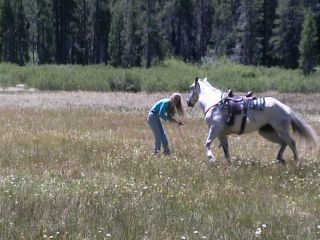
After working with him and giving him the right cues, Bo rebuilt his confidence and clearly conveyed to him what we wanted him to do.
It became crystal clear that I was the main contributor to the problem (his supervisor), not Mr. B. He could and wanted to do the right things; I simply wasn’t communicating clearly and consistently with him. As a result, he lost his trust of me and became confused and insecure.
My “Mr. B situation” is not unlike what happens every day in the workplace. As a business leader, ask yourself:
As unintentional as it may be, it happens all too often in business.
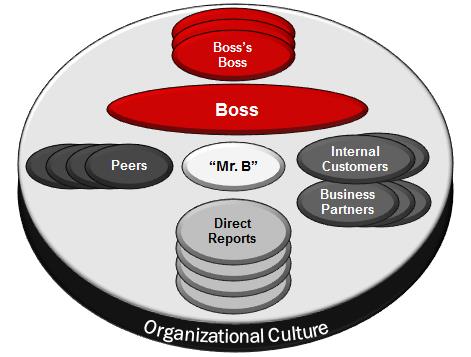 I have Mr. B and Bo to thank for helping me become a much more effective executive coach. We now focus on the whole causal system when coaching which results in amazing results. Consequently, over the last few years, we have experienced a surge in executive coaching requests. And, our requests are entirely from word-of-mouth since we neither actively market nor target coaching.
Since I actually prefer not to coach (I would rather work with an organization and its leaders to utilize tools and techniques to “up” their skills and EQ in order to prevent any costly “Mr. B situations” from happening in the first place).
We are offering to share our approach and process with you (please see “Special Webinar” below). It might just save you a lot of time, money and “heart burn.”
SPECIAL WEBINAR: For those wanting to learn Leadership Dynamic’s High-Impact Coaching approach and process, sign up for the free Leadership Dynamics Webinar:
Date: July 24, 2013
Time: 8:00 AM (PDT)
“Seats” are limited; first come, first serve basis
For more information, send email to: info@leaders-inc.com, with subject “Webinar”
And read 18 Holes for Leadership by Nancy L. Clark; currently available at Amazon
Copyright ©2013, Leadership Dynamics, Inc. All rights reserved.
Our Mission: To help companies/organizations be healthy, profitable and great places for people to do great work.
Our Philosophy: Transfer the knowledge, tools, and capabilities to our clients so that they can grow and flourish.
Our Approach: Find and/or develop the best practices, tools, methodologies; conduct the due diligence; and help our clients integrate them successfully.
There are some important things to know if you are really going to fail successfully. Fortunately, they are easy to learn and to apply, so it should take you no time at all to incorporate them into your sales program. In fact, many sales managers have used some, if not, all of these practices for years. So you should have great confidence that they are tried and true.

They are leaving!
Also, the improving economy will greatly assist your efforts. From your top to your bottom performers, many are eager to change jobs. It is only a matter of time before you return to those halcyon days of high voluntary turnover and abundant open position requisitions. The days of endless interviews, exit interviews, and company orientations are just around the corner.
Ah, to enjoy those good times again … when even the most marginal sales performer brought a tear to your eye as they departed the company. Or the excitement you felt with all those unexpected “I-need-to-talk-to-you-I-have-an-opportunity-that-I-just-can’t-pass-up” meetings with your best sales people. Yippee … those days are quickly returning.
So if you really want to achieve the highest turnover, without really trying follow these simple rules:
Rule #1: Hire individuals who don’t have the right aptitude to sell/perform the job – (this is a two-for) not only will that frustrate your sales people, but it also will put the spotlight on you by not achieving overall sales results.
Rule #2: Create a confusing incentive program and compound it with your own low EQ so that you recognize them in a fashion that punishes versus rewards them — this works best to drive high performers out quickly.
Rule #3: Overload your sales people with administrative paperwork so that they have very little time to connect to customers – this also can help build an impenetrable wedge between sales and operations (always fun to stand back and watch the fireworks).
Rule #4: Isolate the sales team so that there is no collaboration and/or no sharing of best practices – many successful sales people need and have strong relationship and networking motivations, by isolating them they will find more reason to leave.
Clearly the above is just a sample of what you can do to fail as a sales manager. There are many more, but these are some of the most powerful.
The key is to leverage the improving economy – your sales people will be less tolerant and will have more options. It will take less effort to drive them out. Your life will be easier and your high turnover results will be amazing.
At Leadership Dynamics, Inc. we are rather contrarian. We like helping our clients get the right people into the right jobs doing the right things. We like building high-performance teams and positive business cultures.
If you’re weird like us, give us a call at 1+925-831-9100 or email us at info@leaders-inc.com.
Check us out at www.leaders-inc.com.
 Are You One of the Lucky Few?
Or Do You Have a Horrible Boss?
By Nancy L. Clark
Horrible bosses come in all shapes and sizes. The only consistency among them is that they each have the ability to make your life a living hell. Although most of us would never think of harming another human being, one can’t help but day dream of the demise of a nasty boss. Considering the number of hours you work and the impact a bad boss has on your work life as well as your home life, it is no surprise that a few employees snap. In the movie, Horrible Bosses, three friends conspire to murder their horrendous bosses when they realize how miserable it is making their lives. I wonder how many people will feel a connection to the three friends. I suspect many more than bosses would like to believe.
I recently conducted an informal survey that shocked me by the response. I asked a simple a question – what percentage of your bosses have been outstanding? I suspected that the answers would be relatively low; however, when people started responding, I was genuinely alarmed at how low. Very few indicated that they had had any outstanding bosses during the course of their careers. Subsequently, we decided to conduct a more formal survey. Following are some of the interesting questions and responses:
With all the investment in developing leaders, you can’t help but wonder why we have so many horrible bosses. There is a lot to be said on that subject, but I thought it would be interesting to identify some of the various types and “flavors” of horrible bosses:
These are just a few of the types of horrible bosses. To complicate or explain matters, some bosses are combinations of one or more of the above. As frightening as that may sound, it may explain your boss. The first step is to understand what kind of boss you have and then to determine your best way of dealing with it. Maybe you can help or maybe it is time to leave. Life is too short to be miserable. Just make sure you aren’t making anyone who reports to you miserable as well.
For information on what makes a great boss, go to www.leaders-inc.com and also read 18 Holes for Leadership by Nancy L. Clark.
Copyright ©2011, Nancy L. Clark. All rights reserved.
 By Del Chandler
Maybe you feel your sales team isn’t ready for high gear. Maybe you would be happy if they just were headed in the right direction. Well, wherever your team is, that is where you start. So, first get a baseline of their sales knowledge. No, don’t guess and don’t have your sales managers rank the team. One thing we know for sure is that supervisor assessment is the least accurate gauge. Instead, start using sales analytics. Find out clearly and quickly what each person knows/gets about the sales process. You may be very surprised.
The good news is that you might discover that your top performers have some “holes” and have even more sales potential. I don’t think you would mind if your top folks increased their sales by 10%, 20%, 30% or more — would you? You might also learn that your bottom performers have “fixable” holes. What a delight it would be to turn around those folks who never seem to reach goal!
So if you want to shift into high gear at some point stop grinding the gears and start greasing them. What do I mean by that? Well, consider where you are in the sales management evolution:
1st Gear: Sales managers are surprised by results – good or bad. Sales people are left to their own devices to identify, approach, and sell.
2nd Gear: Sales managers monitor results and use “stick” method to incent higher performance. Commission structures are capped/have unintended consequences. Territories or industries may be identified. Some training/coaching is provided.
3rd Gear: Sales managers monitor results closely and work with sales team to forecast realistic goals. Traditional sales training is provided that focuses upon asking open-ended questions, presenting, dealing with objections, closing. Ride-alongs are utilized as coaching opportunities. Technology systems to monitor activity and control database (e.g., CRM) are utilized.
4th+ Gear: Sales managers identify winning sales profiles and hire to that (get the right person into the right sales position). Management focus is on cause as well as results. Consequently, review/monitor real-time sales results, but also assess causes (e.g., sales knowledge, etc.). Clear account planning and focus is integrated into sales management. Aligned training based upon sales knowledge assessment is provided. Knowledge sharing throughout – learn from the top performers and veterans to improve the whole team. High-impact coaching is infused into all sales managers – utilizing analytics and behavioral knowledge.
If you are in first gear, you do not need to grind through all four gears. Add a few of the key elements, but step on the clutch and push it into 4th! It may jerk a bit, but ease out the clutch and add a bit more gas. Don’t give up.
I said in the beginning, start with a baseline. Use it to understand the cause of your sales results. Take the mystery out of sales performance and discover where the real causal gaps are. You can’t fix the car without proper diagnostics – same for your sales team. Our recommendation is to use the Selling Skills Assessment ToolTM or something equally as strong. We know it works and helps our clients get sales lifts of up to 40% or more. It isn’t the Holy Grail, but it is a critical first step to getting to HIGH GEAR!
How can we help you and your sales team’s performance?
Contact me at our office (925) 831-9100 or visit our website www.leaders-inc.com or on Facebook at www.facebook.com/leadersinc.
Recently I appeared on the Sales Sense Solutions radio show with Mike Krause and in the course of our conversation we helped sales people build a better understanding of a prospect’s needs. This is critical knowledge before you try to sell.
 By Nancy L. Clark
Successfully leading a virtual team is more about your aptitude to trust and to engage team members than anything else. Whether you have team members who reside in a different building, a different city, or a different country, your individual leadership style will determine if you are able to expand productivity (performance expander) or to inhibit productivity (performance diminisher). Take the example of Maria.
Known as a take charge, get it done manager, Maria focuses on results and diligently works to make sure all deadlines, budgets, and regulations are met. With a traditional (local) team, she is able to oversee the work and to keep in close contact with her people. However, when asked to lead a virtual team, her results plummeted. Upon interviewing team members, the major problem was clear – Marie’s leadership style was diminishing performance. People did not feel a connection to her. She was not comfortable reaching out or communicating easily–preferring instead to communicate via email or through the chain of command. And, when she did communicate it frequently sounded critical and unsupportive. People did not feel trusted and soon felt more of a child to parent relationship with Maria versus an adult to adult relationship. Subject matter experts (SMEs) and seasoned professionals became tactical and retreated into lower functioning levels. All in all, it was a disaster. Performance slid, people were unhappy, and results were unacceptable.
Frequently organizations prefer to believe the failure of a virtual global team is due to time zones, language, customs, and/or cultural issues. Those are all important, but the foundation for success is leadership style. Do you have the aptitude or natural behavior to trust your people? Are you able to delegate not just tasks and details, but real authority to accomplish the work? Can you adjust your style to meet the needs of your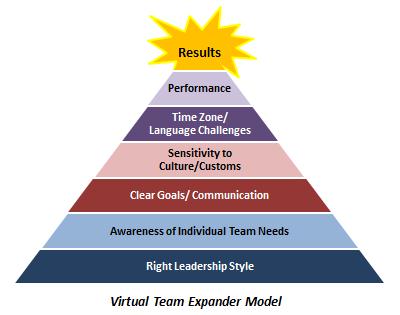 various team members? Do you even understand what each of your team members needs in order to be engaged and productive? These are critical elements that few organizations ask. As Dr. Demings said, “Experience alone teaches you nothing.” If organizations don’t identify what makes a performance expander, they will be doomed to random failures caused by performance diminishers. Now, more than ever, leaders need to examine themselves and ask – do I expand the capabilities of my team? Or is my behavior diminishing the performance? If you don’t like the answer, it is time to seek help (e.g., executive coach).
Note: Diminishers can “hide” more easily in traditional settings. Although their team members see it, diminishers often times can still drive short-term performance albeit at a high cost (poor utilization of resources, increased turnover, etc.). However, the leadership gaps of diminshers are amplified in virtual teams. Their shortcomings are more exposed and more problematic.

Do you have what it takes to be a world-class leader? And do you know what to do with it?
Download an excerpt today!
© Copyright 2026. Leadership Dynamics, Inc.. All Rights Reserved.
Site Design and Development by BumbleBee Marketing Services, Inc